One Game, Forty Faces: How Mahjong Split Into the Styles Played Today
American jokers, Japanese dora, Taiwanese sixteen-tile hands, Singaporean animals: there was never a rulebook authority, so every port city wrote its own.
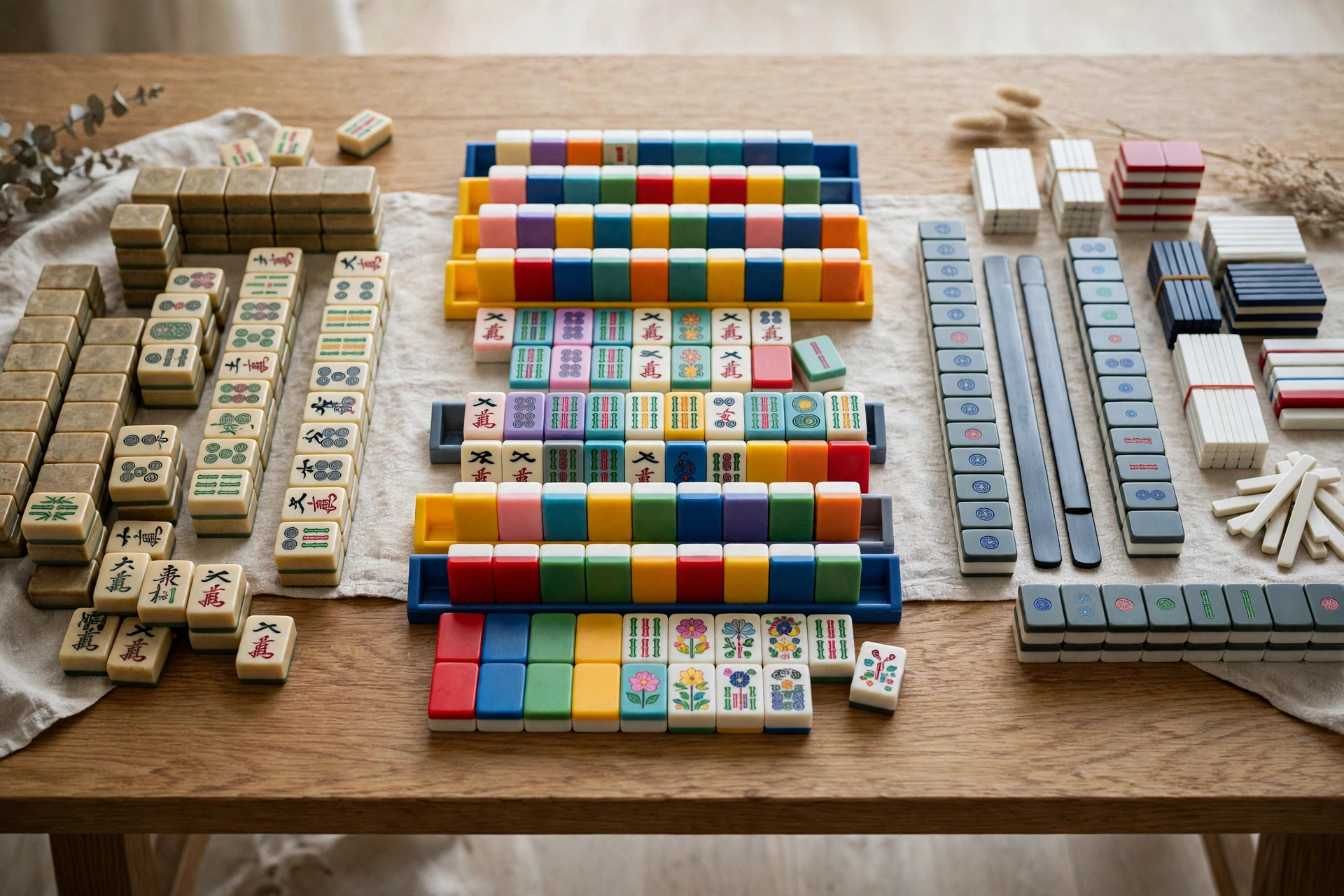
There are more than forty recognized variants of mahjong played today, and the reason is simple: for most of its life the game had no governing body, no official rules, and no printing press moment. It spread person to person, port to port, and every community that adopted it fixed the parts it disliked and kept the parts it loved. The tiles stayed recognizable. Everything else was negotiable.
The mother game and the first split
Classical Chinese mahjong of the late 1800s was a scoring-heavy gambling game for four. Hong Kong style is its closest living descendant: same bones, cleaner scoring, still the default across much of the Chinese-speaking world. Taiwan made the first structural change, dealing sixteen-tile hands instead of thirteen, which makes bigger, slower, more dramatic hands possible.
Japan turns it into a sport
Mahjong reached Japan in the 1920s and evolved into Riichi: a defensive, information-rich game built around the riichi declaration (a bet that your hand is ready), bonus dora tiles that supercharge scoring, and furiten, a rule that punishes careless discards. Red five tiles arrived much later as an extra spice. Riichi is now the most internationally organized style, with a world championship, ranked online platforms and, since 2018, the televised M-League in Japan, where sponsored teams of professionals play in jerseys like a football club.
America rewrites it twice
America changed the game more than anyone. Joseph Babcock's 1920 simplified version started a fad (see our story on the 1920s craze), and when the fad collapsed, the players who stayed, many of them Jewish women in the Northeast and, in parallel, military families, kept rewriting it. In 1937 the National Mah Jongg League standardized the American game: the Charleston tile-passing ritual, an annual card of set winning hands, and no flower restrictions. Jokers, the game's most American feature, became official in 1961. Quints and sextets exist nowhere else on earth.
The long tail
Around the edges the variants keep their local flavour: Singapore sets add animal tiles, Malaysian three-player mahjong trades a suit for speed, Wright-Patterson rules travelled with U.S. Air Force families, and China itself eventually published official Mahjong Competition Rules in 1998 to give international play a neutral dialect. Online, the split continues: apps and AI opponents (which now beat strong human players in riichi) are standardizing strategy even while house rules multiply.
Why the split is the point
Every variant is a record of who was playing: gamblers in Hong Kong kept the scoring lean, Japanese pros built a spectator sport, American leagues built a social ritual around a card that changes every spring. Buying a set today means picking which branch of the family you are joining, and that choice, game first, is the one that decides everything about what you should buy.
Put the story to use
Choosing your branch? Start with American vs Chinese vs Riichi, then take the Set Finder quiz for a set that fits the game you actually play.
Sources and notes: style histories cross-checked against the Yale Review of International Studies essay on mahjong's spread, National Mah Jongg League history summaries (1937 founding, Charleston codified, jokers official 1961), and published variant counts (40+ recognized variations, per mahjong community references). Regional variants described at the level the sources agree on.
More stories
Who Invented Mahjong? Five Suspects and One Very Patient Sailor
A philosopher, a port official, two brothers, an army camp and a Shanghai noble all get the credit. The honest answer is stranger than any of them.
Mahjong's First Boom: America Went Mad for Tiles in the 1920s
Twelve thousand sets at Abercrombie & Fitch, cattle bone shipped to Shanghai, songs on the radio. The current mahjong boom is a rerun; the first one was wilder.
The Biggest Prize Ever Won at Mahjong (Is Smaller Than You Think)
No million-dollar mahjong payday exists. The richest verified prize in the game is about $330,000, and it went to a team of four in Tokyo. Here's why mahjong money works differently.
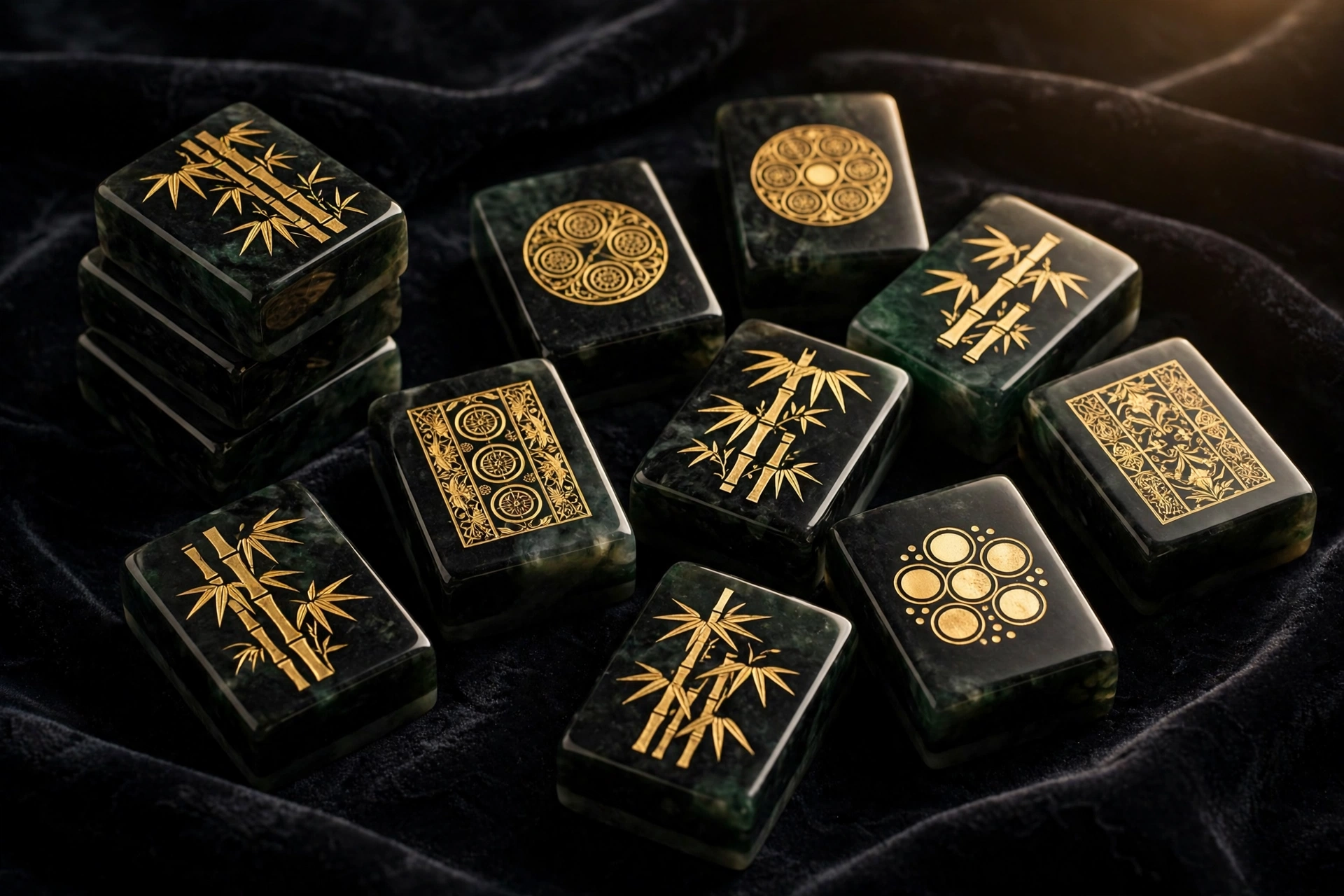
The $1.888 Million Mahjong Set, and What 'Expensive' Really Means
A one-of-one jadeite set in Singapore just reset the ceiling. Meanwhile a genuine 19th-century set might cost less than dinner. Both stories are true.
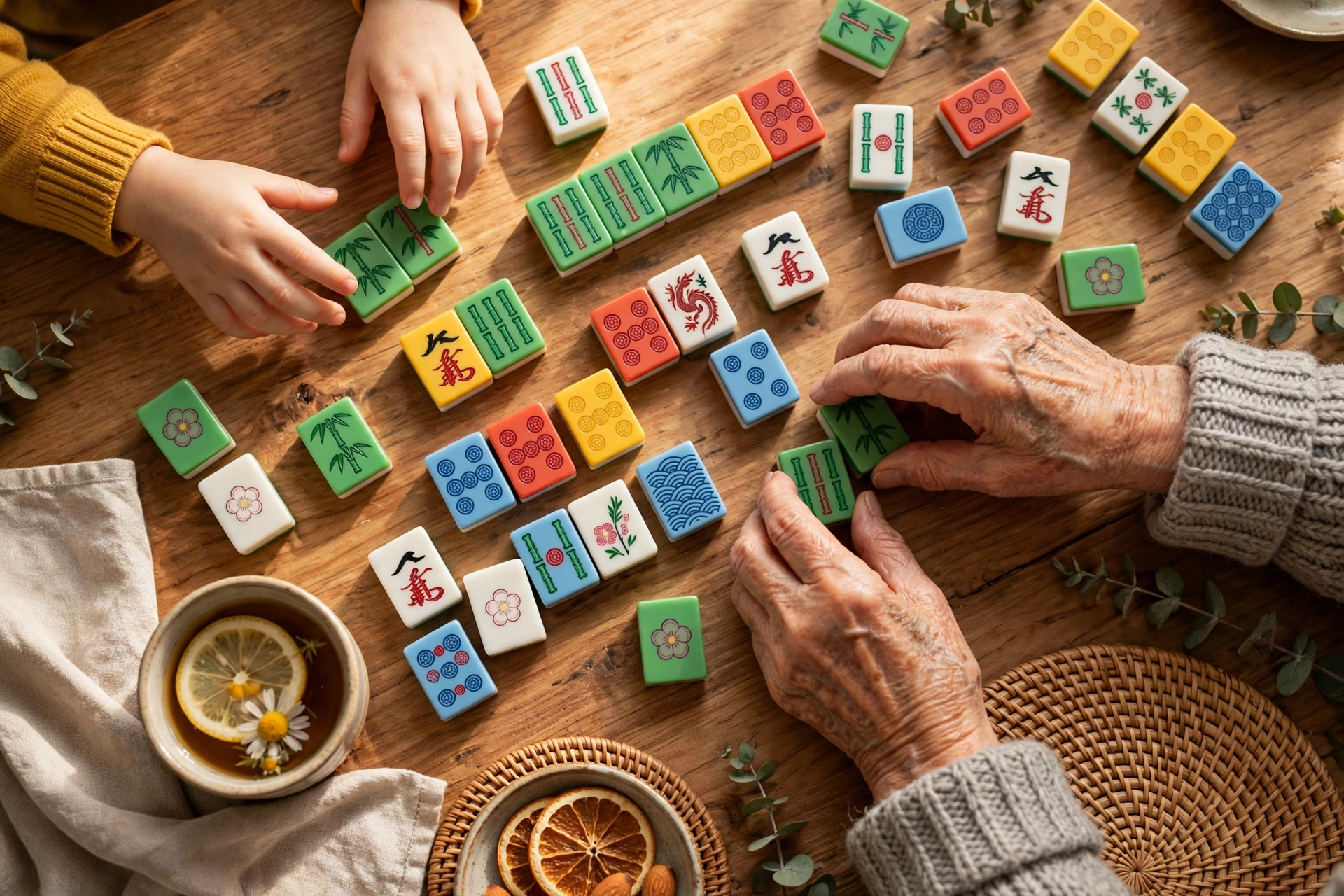
Mahjong for Kids: Start at Three, Play for Real by Eight
Too complex for children is the myth. Leveled properly, mahjong is a memory gym, a maths lesson and the rare game grandparents and grandkids play as equals.