Mahjong's First Boom: America Went Mad for Tiles in the 1920s
Twelve thousand sets at Abercrombie & Fitch, cattle bone shipped to Shanghai, songs on the radio. The current mahjong boom is a rerun; the first one was wilder.
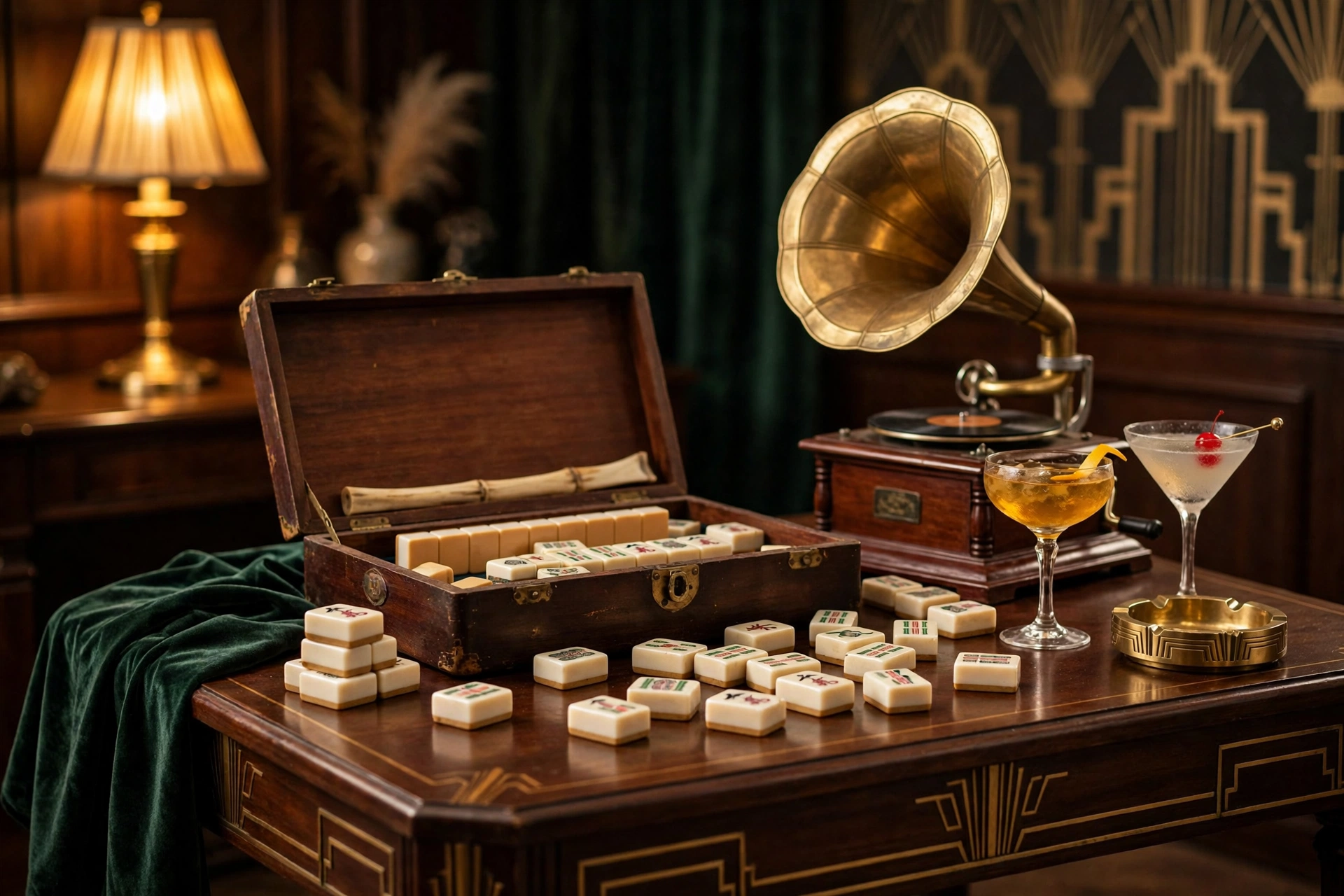
Mahjong in America is having a moment again, but it is the second one. The first, a century ago, was bigger, faster and much stranger, and it built supply chains, pop songs and a small fortune before vanishing almost overnight.
An oilman, a red book and a department store
Joseph Park Babcock, a Standard Oil executive posted to Suzhou (Soochow), learned the game in expatriate clubs and saw the commercial opening. His simplified rules, published in 1920 as the famous "red book," and his trademarked spelling "Mah-Jongg" made the game teachable. Abercrombie & Fitch in New York sold the first American sets in 1920; when Washington, D.C. caught the fever, co-owner Ezra Fitch reportedly sent buyers into Chinese villages to purchase every set they could find. The store sold some 12,000 sets in all, and W. A. Hammond's Mah Jongg Sales Company industrialized the importing.
Bone from Kansas, carved in Shanghai
Demand outran the village supply, so Shanghai workshops scaled up, and the raw material flowed the other way across the Pacific: vast quantities of American cattle bone, shipped from Kansas and Chicago stockyards, were mounted on bamboo and carved into tiles for export back to the United States. Contemporary accounts note the tiles were largely engraved, stained and coloured by children in those workshops, a detail the fashionable buyers of 1923 did not ask about. The trade was enormous: a Los Angeles Times report put sales at almost $850,000 worth of sets in the first nine months of 1923 alone, and by 1924 mahjong sets were the sixth largest import from Shanghai to the United States.
Songs, costumes and the White House
At the 1923 peak, mahjong was a full pop-cultural event. Eddie Cantor sang "Since Ma Is Playing Mah Jongg," a "Mah Jongg Blues" topped charts, a musical called "Miss Mah Jongg" opened, radio stations broadcast lessons, department stores staged living window displays of young women playing, and President Warren Harding played at the White House. Babcock's trademark earned him a share of a licensing sprawl that reached candy and clothing.
The bust, and the women who kept the game
By the end of the decade the fad died as suddenly as it had started, replaced, in the cruel summary of the collecting histories, by miniature golf. But the game did not die with the fad. The women who had played through the twenties kept playing, and in 1937 they organized the National Mah Jongg League, standardized the rules and started issuing the annual card: the institutional backbone the game still runs on, with some 350,000 registered NMJL players after its post-Covid surge. The current boom, designer tiles, clubs, cruises and all, is playing to a script written in 1923.
Put the story to use
Curious what the 1920s sets were made of, and what a real bone-and-bamboo set costs now? Read Tile Materials, Explained and our story on the most expensive sets ever.
Sources and notes: Homes & Antiques collecting guides (Babcock, Abercrombie & Fitch, Shanghai workshops, cattle bone trade, miniature golf succession); Los Angeles Daily Mirror history of the craze (LA Times figures: ~$850,000 of sets in nine months of 1923); Oxford English Dictionary entry via Barry Popik (A&F 12,000 sets, first sales 1920); Mahj Tile Talk history summary (Harding, sixth-largest Shanghai import 1924, NMJL 1937, 350,000 registered players). Figures are as reported by those sources.
More stories
Who Invented Mahjong? Five Suspects and One Very Patient Sailor
A philosopher, a port official, two brothers, an army camp and a Shanghai noble all get the credit. The honest answer is stranger than any of them.
One Game, Forty Faces: How Mahjong Split Into the Styles Played Today
American jokers, Japanese dora, Taiwanese sixteen-tile hands, Singaporean animals: there was never a rulebook authority, so every port city wrote its own.
The Biggest Prize Ever Won at Mahjong (Is Smaller Than You Think)
No million-dollar mahjong payday exists. The richest verified prize in the game is about $330,000, and it went to a team of four in Tokyo. Here's why mahjong money works differently.
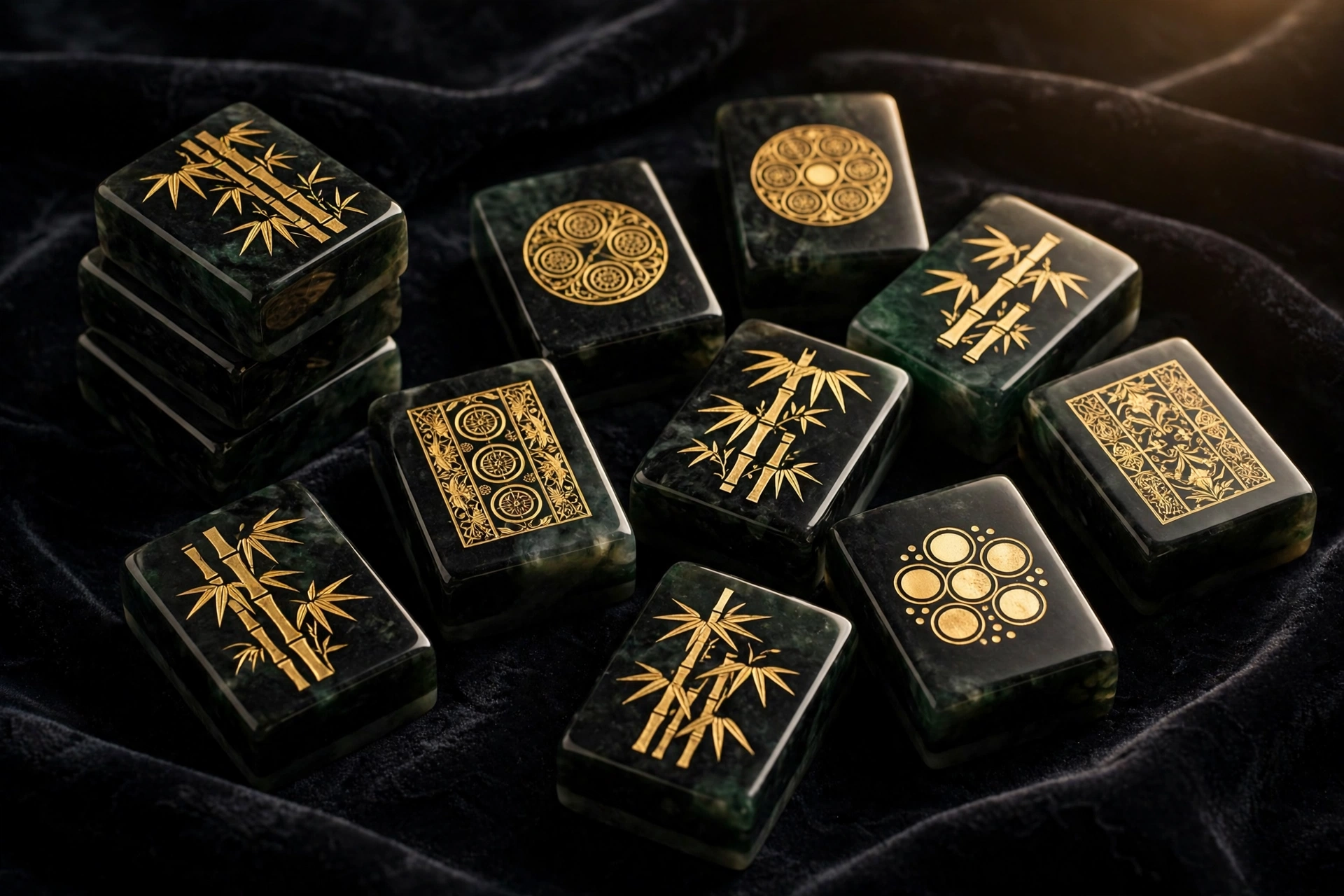
The $1.888 Million Mahjong Set, and What 'Expensive' Really Means
A one-of-one jadeite set in Singapore just reset the ceiling. Meanwhile a genuine 19th-century set might cost less than dinner. Both stories are true.
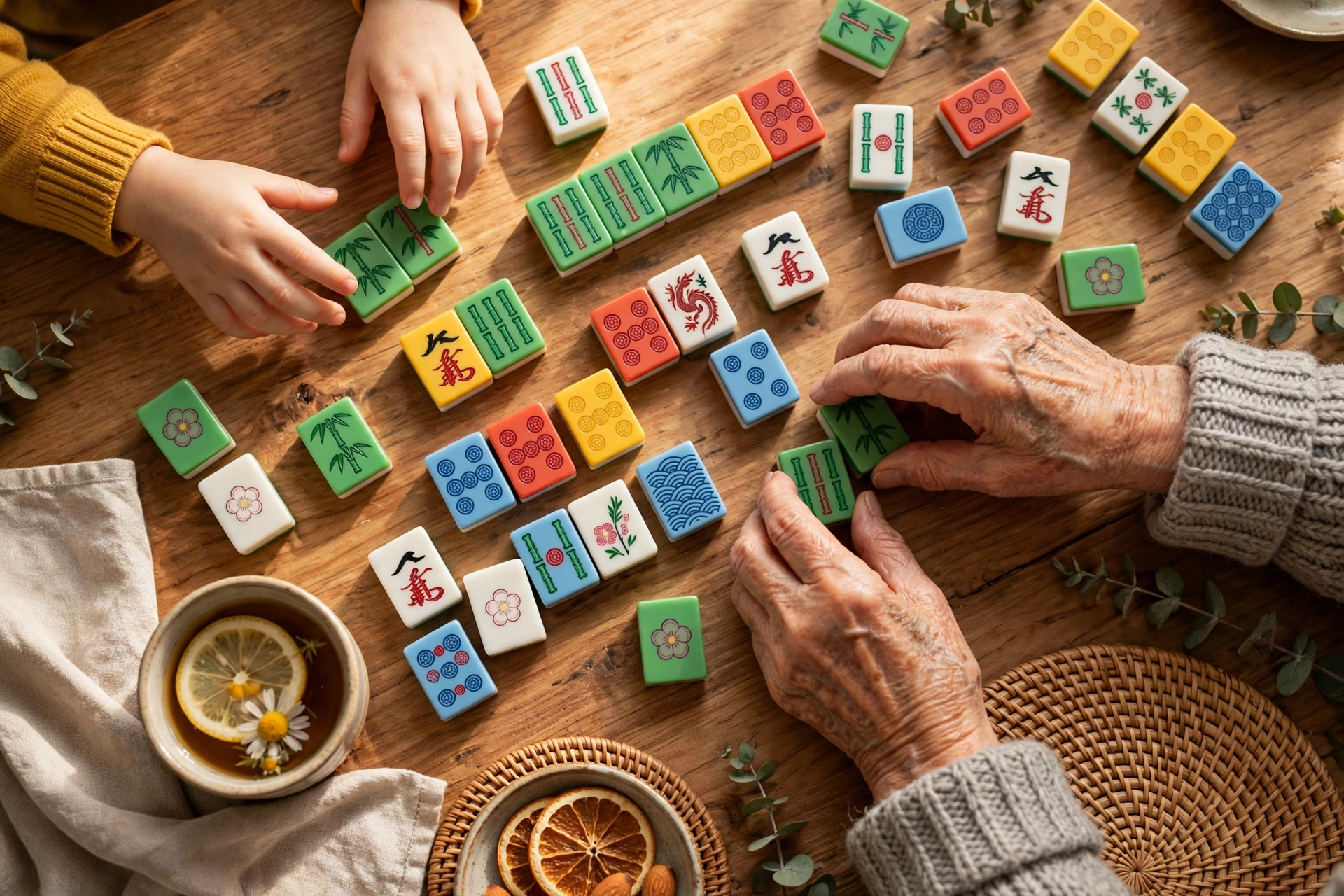
Mahjong for Kids: Start at Three, Play for Real by Eight
Too complex for children is the myth. Leveled properly, mahjong is a memory gym, a maths lesson and the rare game grandparents and grandkids play as equals.